
EMPLOYEE EMPATHY
Understanding other people’s emotions is a key skill in the workplace. It not only enables to resolve conflicts, and build more productive teams, but also to improve the relationships with co-workers, clients and customers.
The importance of empathy in any business can not be overstated. All the key management skills such as decision making, employee engagement and organizing work plans hinge on the ability to empathize with your team.
Being empathetic in the workplace provides concrete returns. It is said that companies that prefer empathy generate 50% more earning. Likewise, 1 in 3 workers would leave their companies for a more empathetic environment.According to Businessolver’s 2017 Workplace Empathy Monitor report, empathy directly influences employee loyalty, engagement and productivity.
Having said that, it is a fact that adopting a compassionate tone isn’t a piece of cake. Empathetic initiatives don’t come out of thin air but requires a continuous effort.Practicing empathy can be challenging, both emotionally and mentally. Getting caught up in the problems and struggles of your co-workers means investing yourself personally into their lives. Plus, empathy is difficult to track on the bottom line.
However, if you are a leader you already know well that connecting coworkers helpsustain thriving company that’s built for the long term. Employee productivity falls to minimum due to personal struggles or workplace conflicts. Overpowering emotions are a boulder in the river and all the progress either halts or change the course of efforts.
Empathy as a secret advantage can make wonders. In words of Martha Beck (renowned life coach) empathy acts as “emotional cardio” and helps making meaningful connections with your team mates.
According to psychologist Daniel Goleman, empathy is one of the five principal components of emotional intelligence – a vital leadership skill. It develops through three stages: cognitive empathy, emotional empathy and compassionate empathy, being the most active form of all.
For the effective use of empathy, you need to put aside your own viewpoint and see things from the other’s perspective. For an authentic brand you not only need to make your employees feel appreciated but make them believe that their well being is among your top priorities. Workplace empathy works in the following way:
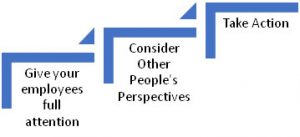 Developing Empathy at Work:
Following tips might help creating an empathetic environment at your workplace:
Listening the Un-said:
Actively listening to your coworkers requires effort. Understand that your time spent in the workplace is just as valuable as theirs is and better listening means solving their problems in a timely manner.
Master the Art of Asking Questions:
When you ask thoughtful questions of your coworkers, you’re basically saying, “Okay, I hear you. What can I do to help? How are we going to take care of this?”
Walk in Your Coworkers’ Shoes:
Think that you have a lot on your plate? Your coworkers probably feel the same way. If a coworker sounds irritated or otherwise annoyed while communicating with you, just remember the last time that you had a rough day.
Self-Assumptions are a No No!
This goes without saying, but don’t automatically assume the worst of people. Maybe that co-worker who’s become increasingly needy is having a tough time at home. Workplace stress comes in all shapes and sizes. Practicing patience with your co- workers is key to demonstrating empathy in the workplace.
People Have Feelings:
Positive workplace relationships make empathy much easier as you get to know your co-workers as people rather than email addresses or departments.Although you don’t need to be best friends with everyone in the office, taking some interest in your co-workers beyond a professional capacity is a major plus.Take those team-building exercises seriously. Employees are much more likely to work smoothly with a friendly face.
Empathy Doesn’t Act Overnight:
Your quest for a more empathetic workplace is a marathon, not a sprint.Learning how to develop empathy skills takes time. The more you interact, the easier it becomes to show them compassion.
Conclusion:
Once you’ve kindled positive relationships with your co-workers, everyone else in the office will be more likely to return the favor, resulting in a connected, compassionate workplace.Workers thrive when they feel that their voices and concerns are heard. Remember, employees who feel heard, understood, and appreciated will feel more engaged at work, leading to a better business.